
Barren Soil to Bountiful Harvests: How Climate-Smart Kitchen Gardens are Reshaping Rural Ghana- Wa West District
Updated: Apr 3, 2025

A Land of Scorched Earth and Resilient Farmers
In Ghana’s Upper West Region, where the land cracks under relentless heat and rains arrive as unpredictable torrents, farming is not just an occupation, it is an act of survival. The Wa West District, like much of the region, is at the mercy of a changing climate. For decades, smallholder farmers have sown their fields with hope, only to watch their crops wither under scorching droughts or be washed away by sudden floods.
In these rural communities, where rain-fed agriculture is the backbone of food security, climate change is not an abstract concept—it is an everyday battle.
For women, the stakes are even higher. They bear the responsibility of feeding their families while struggling with limited access to land, capital, and climate-adaptive farming techniques. The question is urgent: how can they ensure their families eat, earn a living, and break free from the vicious cycle of climate-induced poverty?
A Bold Vision: Climate-Smart Kitchen Gardening
Enter TRANSID, a leading NGO committed to empowering women through sustainable agriculture. Under the leadership of Martin Aakyaayir, Agribusiness and Climate Resilience Lead, TRANSID driving a silent revolution and transforming food security and community resilience through the Women Empowered for Natural and Green Horticulture (WOMENGH) Project which was launched in 2023 in the Wa West District, Ghana. With temperatures soaring, rainfall becoming increasingly erratic, and drought threatening agricultural sustainability, smallholder farmers, particularly women have been pushed to the brink of economic and nutritional vulnerability.
This climate smart project is not just about growing food, it is about rewriting the narrative of rural resilience. WOMENGH arms women with the tools to fight back against climate uncertainty. With a focus on Climate-Smart Agriculture, Energy, Institutions, Nutrition, and Knowledge, the project is changing lives across ten vulnerable communities with the flagship Kitchen Gardens intervention.
The Revolution Taking Root in Backyards
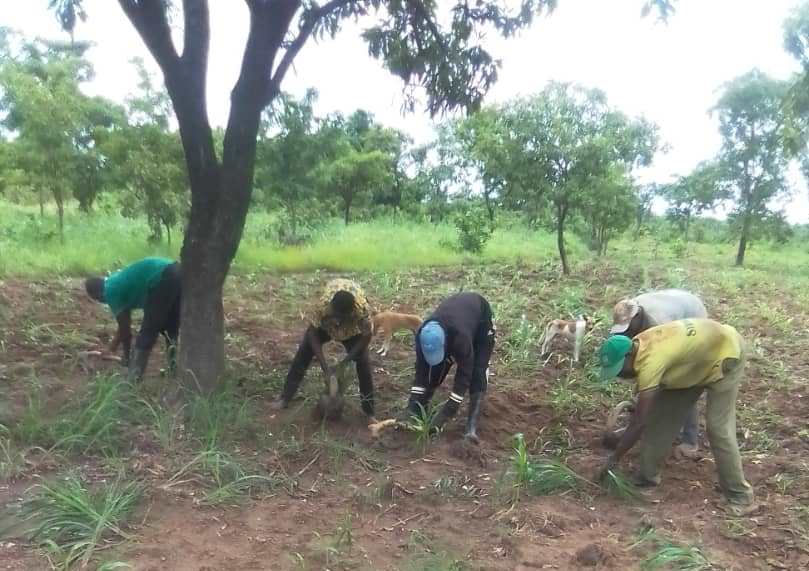
Across the Wa West District, what were once barren backyards are now thriving micro-farms, producing lush vegetables year-round. These kitchen gardens are more than just plots of land, they are a lifeline. Women grow essential vegetables like pepper, okra, onion, beans, cucumber, tomatoes, and ginger, ensuring a steady supply of nutritious food while reducing their dependence on expensive market produce.
So far, 45 kitchen gardens are operational, with a bold target to establish 200 by the end of 2025. The intervention is simple but powerful:

‘I No Longer Beg for Food’: Women’s Voices from the Fields
The impact is real, and the voices of women leading this change are impossible to ignore.
Dary from Wechiau Bao: “Before, we bought everything from the market—sometimes we couldn’t afford it. Now, my garden provides for my family, and I even share with neighbors. We eat better, save money, and live with dignity.”
Kaadaare Justina from Ole: “I never imagined my small backyard could become a source of both food and income. Selling surplus vegetables gives me money for school fees, and my family eats fresh, healthy meals daily. This is freedom.”
Faati from Salimana: “When my onions and tomatoes thrived, I took them to the market and earned 200 cedis. It was the first time I made money from farming on my own. I used it to buy books for my children.”
Kitchen Gardens Are More than Just a Trend
Kitchen gardens may be small in scale, but their impact is monumental. They are:

Scaling the Impact: A Call to Action
The success of the WOMENGH project is just the beginning. To scale up this revolution, we need partners, policymakers, and global advocates to step in and support the next phase. We call on:
Donors and development agencies to partner TRANSID in expanding kitchen gardens across the Wa West District and beyond.
Government institutions to integrate kitchen gardening into food security policies.
NGOs and research institutions to drive further innovation in climate-smart, small-scale farming.
Businesses and private sector actors to create value chains that connect women farmers to larger markets.
This is not just about agriculture, it is about economic liberation, climate justice, and human dignity. Kitchen gardens are proof that small interventions, when placed in the right hands, can lead to big transformations. Are you ready to be part of this movement? Donate to support WOMENGH
The future of food security starts here, and it starts with women.
Authors:
Prince Caesar Tampah
(Executive Director, TRANSID LBG)
Aakyayir Martin
(Project Lead – Agribusiness & Climate Resilience, TRANSID LBG)


Comments