
Ghana's Unfinished Story: Can the Upper West Region Spark a New Chapter for African Resilience?
Beyond Statistics: How Local Empowerment Can Transform a Continent
A Sobering Economic Reality
The latest data from Visual Capitalist and Voronoi paints a stark picture: Africa is home to 38 of the world's 50 poorest nations. With Sub-Saharan Africa's average GDP per capita forecast by the IMF to be a meager $1,600 in 2025, the continent faces immense challenges, from ongoing climate crises to post-pandemic recovery and geopolitical instability. Within this difficult landscape, Ghana stands out, ranking 23rd globally with a GDP per capita of $2,500. However, this national average belies significant regional disparities, most notably the deep divide between southern and northern Ghana. The Upper West Region, despite numerous interventions from both government and civil society organizations, remains an area plagued by extreme poverty. This commentary, informed by insights from the United Nations (UN) and UNDP, explores Africa's broader economic struggles, Ghana's unique resilience, and propose a transformative vision for its northern frontier.
Africa's Economic Tightrope

Africa's economic reality is stark. With countries like South Sudan ($0.3K), Yemen ($0.4K), Burundi ($0.5K), Central African Republic ($0.5K), and Malawi ($0.6K) at the very bottom, it's clear the continent is under immense pressure. Conflicts in the Sahel and the Democratic Republic of Congo ($0.7K) cripple trade, and record droughts, highlighted in UN climate reports, threaten food security for millions. The IMF's projection of a $1.6K average GDP per capita for Sub-Saharan Africa underscores a region where 60% of the population lives on less than $3.20 a day—a figure that makes the UN's Sustainable Development Goal (SDG) 1 to eradicate extreme poverty by 2030 incredibly challenging.
Yet, amidst these formidable struggles, Ghana's relative stability offers a beacon of hope. This resilience prompts a crucial question: how can Ghana's successes be replicated and extended across the continent, particularly in its own most vulnerable regions like the Upper West?
Ghana’s Balancing Act
Ghana, with a projected GDP per capita of $2,500 by 2025 (IMF), stands out. Its economy, driven by robust cocoa exports, oil, and a burgeoning tech sector, significantly outperforms neighbours like Mali and Chad (both $1,000). The UNDP highlights Ghana's impressive strides in poverty reduction, cutting multidimensional poverty from 55% in 2011 to 46% in 2017. This translates to 14 million people lifted from deprivation in health, education, and living standards, a clear alignment with UN Sustainable Development Goals.
However, this national success story conceals a stark north-south divide. In the Upper West Region, the reality is far grimmer. UNDP's 2023 data reveals a multidimensional poverty rate of 37.4%, with a staggering 40% of residents experiencing severe deprivation. This is more than double the 11.7% seen in the Greater Accra region. The disparity extends to rural areas, where poverty affects 36.7% compared to 14.6% in urban centers. Education also lags, with UNESCO reporting only 19-25% of pupils nationally meeting proficiency standards—a figure likely even lower in the isolated north. This critical imbalance poses a significant challenge to Ghana's overall progress and resilience.
The Upper West’s Silent Crisis
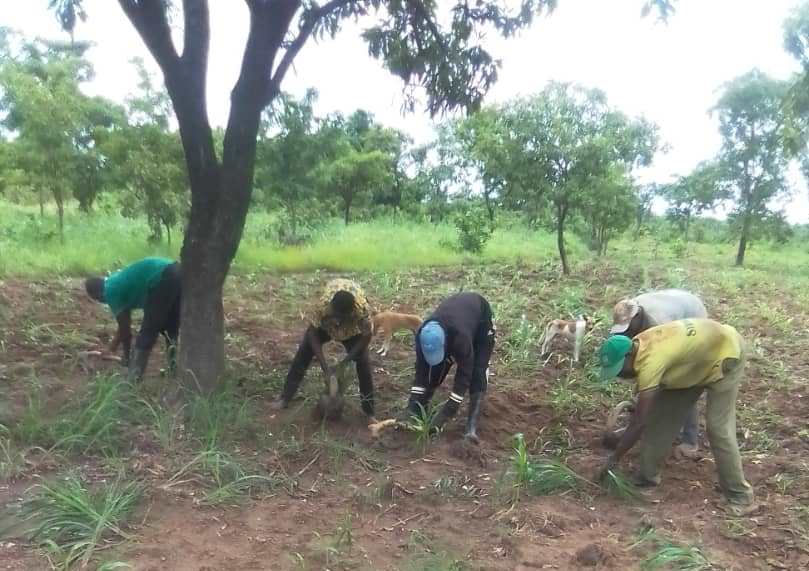
In Ghana's Upper West Region, the economic pulse is barely perceptible. The majority of the population, around 70% according to UN food security assessments, relies on rain-fed subsistence farming, making them incredibly vulnerable to the erratic weather patterns experienced in 2025. Education is also a significant hurdle, with historical data from UNESCO showing that only 51% of children enrol in primary school.

Access to healthcare remains a distant dream for many. The UNDP highlights low health insurance coverage and a scarcity of essential facilities, issues exacerbated by unpaved roads that further isolate communities. This region embodies Ghana’s unfinished promise, a stark reminder that national progress doesn't always translate to local prosperity. As global attention turns to the UN’s 2025 SDG midterm review, the Upper West’s plight stands as a critical litmus test for equitable growth and a true measure of African resilience.
A Blueprint for Transformation: Igniting Hope in the Upper West
The cries from Ghana's Upper West Region are echoing across the continent, demanding more than just sympathy; they demand a comprehensive, actionable strategy. Drawing on global best practices and urgent UN recommendations, we present a five-pillar plan to transform this vulnerable frontier into a vibrant hub of resilience and prosperity.
Imagine a region where dusty, impassable roads no longer isolate communities and electricity lights every home, fuelling enterprise and connecting lives. Our first imperative is an Infrastructure Revolution, a commitment by the Government of Ghana, supported by International Development Banks and private sector firms, to pave 500 km of vital roads and extend electricity to 80% of households by 2027. This isn't just about concrete and cables; it's about unlocking market access for Upper West farmers, allowing their produce to reach buyers beyond their villages, mirroring Rwanda's $1.2 billion infrastructure push that boosted agricultural output by 15%. Local assemblies will be crucial in land acquisition and community engagement to ensure this vision becomes a reality.
The youth of the Upper West are a wellspring of untapped potential. We must unleash it through an Education for Empowerment initiative. By 2026, a $50 million vocational program will train 20,000 young people in high-demand sectors like tech and agri-business. The Ministry of Education and TVET Council will lead curriculum development, while the Ministry of Youth and Sports mobilizes participation. Inspired by Kenya's TVET initiative, which dramatically reduced youth unemployment by 12%, this program, backed by UNDP and UNICEF, will equip the next generation with the skills needed to thrive, with the private sector offering vital apprenticeship opportunities and employment pathways.
In a region where 70% rely on rain-fed farming, climate change poses an existential threat. Our strategy for Climate-Resilient Agriculture calls for an urgent $30 million investment in irrigation systems and drought-resistant crops like millet. The Ministry of Food and Agriculture, alongside the Ministry of Environment, will champion these efforts, aligning directly with UN climate adaptation plans to ensure food security for 60% of the region’s farmers. Farmers' cooperatives will be critical in adopting new techniques, supported by international NGOs like FAO and the World Food Programme, and research institutions developing resilient crop varieties.
Ghana's stability is a unique asset, and it's time to leverage it for regional gain. We propose forging a robust trade pact with Burkina Faso by 2026, fostering Regional Trade Networks that attract $100 million in cross-border investment. The Ministry of Trade and Industry and the Ministry of Foreign Affairs will lead these negotiations, with the Ghana Export Promotion Authority (GEPA) facilitating market access. This strategic partnership, informed by World Bank models, will transform the Upper West from a peripheral region into a vital economic gateway, channelling new wealth and opportunities into local communities through the dynamism of the private sector and the support of ECOWAS.
Finally, no one should be left behind in Ghana's pursuit of progress. Our Social Safety Nets initiative will expand cash transfers to 50,000 households and extend health insurance coverage to 70% of the population by 2027. The Ministry of Gender, Children and Social Protection will oversee cash transfers, while the National Health Insurance Authority (NHIA) expands coverage. Drawing inspiration from Kenya's transformative Hunger Safety Net Programme, which lifted 300,000 people from poverty, these measures, funded by the Ministry of Finance and supported by partners like the World Bank and USAID, will provide a crucial buffer against economic shocks, ensuring the most vulnerable have the dignity and security they deserve, with Civil Society Organizations (CSOs) playing a vital role in outreach and monitoring.
Conclusion: The Defining Moment for Ghana and Africa
Africa grapples with the harsh reality of a $1,600 Sub-Saharan GDP per capita, a stark reminder of the challenges that persist. Yet, Ghana's $2,500 offers not just hope, but a blueprint for what's possible. However, the future of this hope hinges on the fate of its Upper West Region, where a 37.4% poverty rate screams for urgent action.
Guided by UNDP insights and the powerful momentum of the UN Sustainable Development Goals, this region stands at a crossroads. It has the potential to transcend its struggles, to transform its dirt roads into arteries of prosperity, and to become a shining model of resilience not just for Ghana, but for the entire continent.
We are at a pivotal juncture in 2025. The world is watching. Ghana's next chapter, indeed Africa's trajectory, hinges on whether we have the courage and political will to turn data into destiny. Will the Upper West lead Africa's rise from disparity to true prosperity? The answer lies in the choices we make, and the actions we take, starting today. The time for a silent crisis is over; the time for a powerful transformation is now.
Reflections by Prince Caesar Tampah
(A dedicated advocate for community resilience)


Comments