
Empowering Farmers for a Sustainable Future: TRANSID Trains Smallholder Farmers in the Wa West District of Ghana
In a supportive effort to bolster agricultural productivity and sustainability, TRANSID has recently concluded an intensive training program for smallholder farmers in the Wa West District of Ghana’s Upper West Region.

This initiative is part of TRANSID’s broader mission to address the critical shortage of agricultural extension officers in the area and empower farmers with essential skills and knowledge.
Addressing a Critical Need
Capacity building is a crucial element of sustainable development. According to the United Nations Development Programme (UNDP), capacity building involves strengthening the skills, competencies, and abilities of people and communities to achieve their own development objectives. In the context of agriculture, this means equipping farmers with the knowledge and tools they need to improve their practices and increase their resilience to challenges such as climate change.
Agricultural extension services are crucial for disseminating new farming techniques, improving crop yields, and ensuring food security. However, in many parts of Ghana, including the Upper West Region, there is a significant shortage of extension officers. According to the Ministry of Food and Agriculture, Ghana's ratio of extension officers to farmers is roughly 1:1700, far below the recommended ratio of 1:500. This shortage leaves many smallholder farmers without the guidance and support needed to adopt modern agricultural practices. The World Bank has highlighted the critical role that extension services play in increasing agricultural productivity and farmer incomes.
The Training Program: A Collaborative and Practical Approach
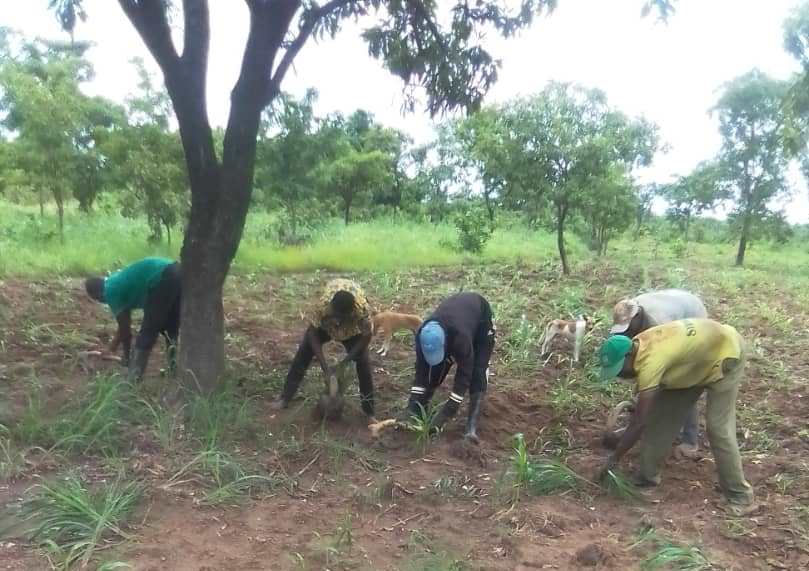
Martin Aakyaayir, the Agricultural programs lead at TRANSID, led the five-day training, engaging farmers through interactive sessions, participatory approaches, and focus group discussions. This method not only facilitated the transfer of knowledge but also encouraged farmers to share their experiences and learn from one another. The training emphasized three core areas:
Safe Application of Weedicides and Pesticides: The importance of using chemicals responsibly to protect both crops and the environment was a major focus. Farmers learned about proper measurements, application techniques, and safety precautions, reducing the risk of harm to themselves and their communities.
Conservation Farm Management: Sustainable farming practices were highlighted, including crop rotation, organic farming, and soil conservation. These practices help maintain soil health and improve long-term productivity. The Food and Agriculture Organization (FAO) notes that, adopting conservation agriculture can increase crop yields by up to 30% while reducing the need for chemical inputs.
Climate Risk Reduction: With climate change posing a significant threat to agriculture, the training included strategies for building climate resilience. Farmers were introduced to climate-resilient crop varieties, water conservation techniques, and early warning systems for extreme weather events. The Intergovernmental Panel on Climate Change (IPCC) reports that such adaptations can significantly reduce the vulnerability of agricultural systems to climate variability and extreme events. Studies indicate that providing farmers with access to the latest technologies and extension services can help farmers adopt more efficient and sustainable practices.
Strengthening Food Security and Continued Commitment to Agricultural Development
This training is a crucial component of TRANSID's efforts to support smallholder farmers, who are pivotal to the agricultural economy in Ghana. In Ghana, smallholder farmers account for about 80% of the country's agricultural production. However, they face numerous challenges, including limited access to modern inputs, inadequate infrastructure, and the impacts of climate change. TRANSID's commitment to agricultural development is resolute.
The success of this training program emphasises the importance of continued support and investment in smallholder farmers. Through delivering hands-on training directly to farmers, TRANSID is helping to ensure that smallholder farmers are not left behind in the push towards more sustainable and productive agriculture. Participants expressed overwhelming satisfaction with the training, highlighting the practical benefits of the knowledge gained. Many also reiterated their commitment to implementing safe farming practices and acknowledged the importance of such initiatives in improving their livelihoods.

A Sustainable Future
As the world faces increasing challenges from climate change, population growth, and food insecurity, the importance of sustainable agriculture cannot be overstated. Training programs are essential for building a more sustainable and resilient agricultural sector whereby smallholder farmers are tooled with the knowledge and skills they need to succeed. TRANSID is helping to ensure a brighter future for the agricultural communities of the Upper West Region.
Author: Prince Caesar Tampah (Team Coordinator)


Comments