
Empowering Rural Communities Through Innovation: Lessons from the Upper West Region of Ghana
Updated: May 27

The Upper West Region of Ghana records one of the highest food insecurity rates in the country. The 2020 Comprehensive Food Security and Vulnerability Analysis put the figure at 22.8%, placing the region among the five worst-affected in Ghana.
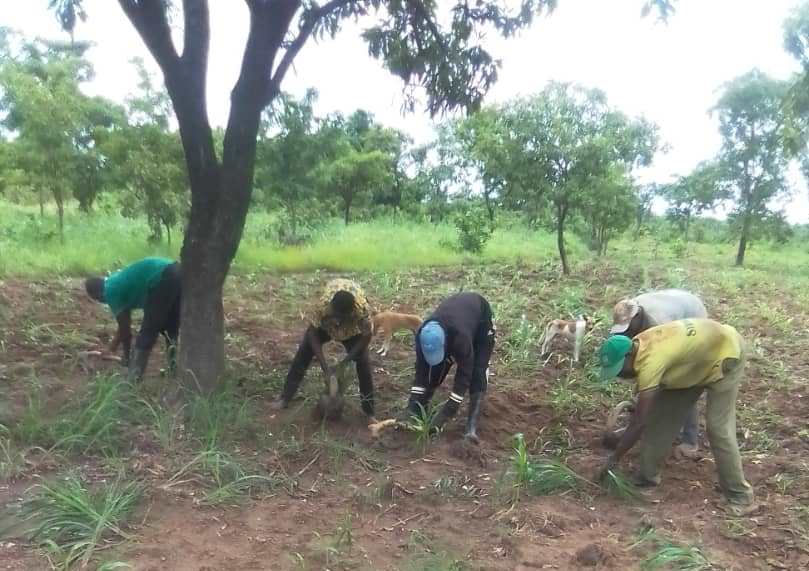
Farming is how most families survive here, yet the rains they depend on have become less predictable over the years. Where farmers used to plant in early April, they now wait until late April or even May. Smallholder farmers in Wa West, Nandom, and Sissala East grow maize, millet, and sorghum on small rain-fed plots with no irrigation and no savings cushion. When the season goes wrong, families absorb the loss with very little to fall back on.
Electricity Access: A Region Left Behind
Ghana's national electrification rate reached 89.4% in 2025, up from 74% in 2015, one of the highest rates in Sub-Saharan Africa. Urban coverage sits at 97.5% and rural coverage nationally has reached 77.8%. The five northern regions, Upper East, Upper West, Northern, Savannah, and North East, hold just 18.8% of Ghana's total population, yet every one of them falls below the national average.
A 2025 Energy Statistics Report confirmed that electrification in the north has not kept pace with the south. In May 2024, the paramount chief of the Banu Traditional Area in Sissala East Municipality stood before the Upper West Regional Minister and disclosed that only 6 of the 14 communities in his paramountcy had electricity. Eight communities were still without power.
In Sissala West District, coverage sits at just 14.3% across the whole district, with grid connection limited almost entirely to communities along the Tumu-Gwollu trunk road. Across Lawra Municipal, Jirapa, Nadowli-Kaleo, Wa West, and Wa East districts, scores of communities remain off the grid, particularly those closest to the borders with Burkina Faso and Cote d'Ivoire.

Wa West and Wa East stand out as two of the most marginalised districts in the region. Mobile phone network coverage is poor across large parts of both districts. The road network drops quickly from tarred roads to feeder roads, then to cattle tracks and footpaths as you move deeper into communities. In the rainy season, even the feeder roads become impassable, cutting off communities for weeks at a time.
Produce cannot get to market, inputs cannot reach farms, and health and education workers who are already reluctant to be posted there find another reason to leave. Dupari and Zukpuri had no electricity at all before a UNDP-supported solar project arrived, and they represent hundreds of settlements still in the same situation. Ghana has approximately 3.7 million people without electricity, concentrated mostly in the rural north.
What Is Working on the Ground

Salamatu, Dakota, and Afia, all in their sixties, live in Dupari and Zukpuri in the Upper West Region. With UNDP support through the GEF Small Grants Programme, they trained for six months at Barefoot College in India, learning to install and maintain solar systems through sign language and colour-coded circuits because none of them had been to school.
When they returned, they and two other women connected 150 households to electricity, replacing an estimated 3,000 litres of kerosene their communities burned every month for light. Salamatu has since trained her youngest son, who helps with installations when he comes home from school in the city.
What they built in Dupari and Zukpuri was essentially a community-managed solar mini-grid, maintained by people from within the community itself. The model shows that women's groups in Wa West and Wa East, with the right training and modest funding, can install and run their own systems without waiting for utility companies or government contractors to arrive.
NGOs like TRANSID, working alongside district assemblies in Wa West and Wa East, are well placed to identify communities, organise training cohorts, and connect them to programmes like the UNDP GEF-SGP that have already proven they will fund exactly this kind of work.
Taking this further, there is a strong case for training basic school students in solar installation and maintenance as part of a structured community energy programme. Basic school pupils stay in their communities through their school years and can serve as junior technicians maintaining local systems. When they eventually leave for senior high school, they carry an employable, practical skill. Some will go on to study science and engineering.
Others will return home. Either way, the community does not lose the knowledge when one person migrates. This approach also feeds directly into the government's STEM and TVET education agenda, giving it a real-world application rooted in a community need rather than an abstract classroom exercise. District education offices in Wa West and Wa East, working with NGOs and the Ghana Education Service, could pilot this through existing basic schools with very modest resources.
The Black Volta River, known as the Mouhoun in Burkina Faso, forms part of the border between Ghana, Burkina Faso, and Cote d'Ivoire. A study by the International Institute for Environment and Development found that the basin holds enough water to meet all local needs until at least 2030, with most of the Ghanaian land along it undeveloped for agriculture. Communities in Wa West sitting along this river have access to water that could sustain dry-season farming at a meaningful scale.
In 2025, 25 solar-powered irrigation facilities were commissioned across the Upper West, Northern, and Savannah regions through the GROW2 project, run by MEDA with $125 million in Canadian government funding. Each facility supports around 50 acres of farmland and serves groups of about 25 women farmers. Over 3,100 women smallholder farmers across 11 districts are direct beneficiaries.
A separate IUCN-backed project reached more than 780 smallholder farmers across eight communities in the Upper East and Upper West regions through solar irrigation systems, enabling year-round production of vegetables like okra, onions, and kenaf and reducing the pressure on farmers to migrate south during lean periods.
In Nandom, farmer field schools have been running practical training sessions where farmers learn techniques like mulching, composting, and planting early-maturing seed varieties, all delivered in local languages through demonstration. A study of 517 smallholder farmers in the region found that those who received early warning information were more than twice as likely to feel prepared for climate shocks.
The region has two functioning solar power plants feeding into the national grid. The 6.5MW Lawra Solar Plant was commissioned in 2020, and the 13MW Kaleo Solar Power Station in Nadowli-Kaleo District followed in 2022. Together they contribute about 22.8MW to the Upper West grid, both funded by Germany's KfW development bank through the Volta River Authority. A second phase at Kaleo adding another 15MW has been funded and is underway.
What Still Gets in the Way
Solar irrigation remains too expensive for most smallholder farmers without external funding. Women, who do much of the farming in the region, face barriers to land ownership and credit access, limiting what they can invest in even when they know what is needed. Extension officers are spread too thinly to reach communities with any regularity.
The road situation compounds everything else. In Wa West and Wa East, the road network drops quickly from tarred roads to feeder roads, then to cattle tracks and footpaths within a few kilometres. In the rainy season, whole communities become unreachable. Goods, services, and people all stop moving. Communities with the worst electricity access tend to carry the same disadvantage in road infrastructure, and the two problems reinforce each other.
The Path Forward
For hard-to-reach communities across Wa West and Wa East, small solar mini-grids at the town or village level are a more practical solution than waiting for national grid extension. Research on rural electrification in Ghana consistently shows that for communities more than a kilometre or two from the nearest grid line, solar mini-grids deliver electricity at a lower cost per kilowatt-hour and with faster payback periods.
One study found a 30% cost saving for a community around 18 to 20km from the grid. Another found the solar mini-grid option returned a positive net present value within 7 years, while the grid extension option did not break even at all. For communities also dealing with poor phone coverage, impassable feeder roads, and high staff turnover in schools and clinics, a working solar mini-grid changes several problems at once. Classrooms can run at night. CHPS compounds can refrigerate vaccines and charge equipment.
Farmers can power irrigation pumps and process produce. Small businesses can stay open after dark.

The communities of Banu, the off-grid settlements of Sissala West, the farming households along the Black Volta in Wa West, and the smallholders of Jirapa, Lawra, and Nadowli-Kaleo have land, water, labour, and knowledge. Expanding solar-powered boreholes and small-scale irrigation along the Black Volta corridor would open up dry-season farming for communities currently relying on one short rainy season.
Getting early warning information through community radio before the growing season would reduce crop losses. Backing women's cooperatives as economic institutions rather than symbolic beneficiary groups would direct more resources to the people doing the actual farming.
The Upper West Region has the resources, the people, and enough documented evidence of what works. Sustained investment that matches the scale of what communities face is what turns that into lasting change.
The writer, Prince Caesar Tampah, is an Environmental Activist and Community Development Advocate in the Upper West Region of Ghana.


Comments